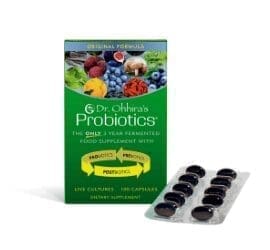
When you compare probiotics, it is easy to focus on the biggest number on the label. But a live bacterial count tells only part of the story. The identity of the microorganisms, their characteristics and the way a formula is made also deserve attention.
The TH10 probiotic strain is one example. Used in the fermentation of Dr. Ohhira’s Probiotics® Original Formula, TH10 has documented laboratory characteristics that offer a closer look at bacterial activity. Understanding what those findings mean, and how they differ from evidence gathered in people, helps put the science in perspective. [1, 5]
What Is the TH10 Probiotic Strain?
Enterococcus faecalis TH10 is a specific strain of lactic acid bacterium isolated from tempeh, a traditional fermented soybean food from Malaysia. Enterococcus is the genus, faecalis is the species, and TH10 identifies the particular strain. [1]
That strain designation matters because microorganisms within the same species can have different characteristics. Research on another Enterococcus faecalis strain does not automatically establish the same properties or benefits for TH10. [2]
The Dr. Ohhira TH10 Connection: Fermentation
TH10 is one of the 13 strains used in Dr. Ohhira’s Probiotics® Original Formula. The formula undergoes three years of fermentation in a food medium containing vegetables, fruits, mushrooms and seaweed. [5]
During fermentation, microorganisms use nutrients in their food environment and produce compounds through their metabolic activity. This process helps explain why a fermented formula involves more than a count of live bacteria. TH10 is one participant in that process, while the finished formula contains the broader fermented food matrix. [5]
Understanding a strain’s laboratory characteristics can help explain aspects of its biology. Understanding the finished product also requires considering its full composition and evidence relevant to that formulation.
What Does Proteolytic Activity Mean?
Proteolytic activity is the breakdown of proteins into smaller pieces, including peptides and amino acids. Think of a protein as a long chain of building blocks. Enzymes involved in proteolysis cut that chain into shorter sections or individual building blocks.
Lactic acid bacteria can use protein-breaking enzymes to obtain nutrients from their surroundings. Research across these bacteria has identified differences in the systems they use to break down proteins and process peptides. [3]
The term proteolytic probiotic describes this type of protein-breaking characteristic. Probiotic proteolytic activity is therefore a specific property to investigate, rather than an overall rating of a product’s effectiveness.
What Laboratory Findings Tell Us About TH10
A patent application describing TH10 reports proteolytic activity measured by free tyrosine content. Tyrosine is an amino acid. The reported values differed under two laboratory culture conditions with different salt concentrations. [1]
This provides documentation of a measured laboratory characteristic. It also illustrates why test conditions matter when interpreting results. The disclosure is a patent document, and the measurements are not results from a human clinical trial.
Laboratory findings can help researchers identify characteristics worth studying further. They do not, by themselves, demonstrate improved protein digestion, greater nutrient absorption or superior results after taking a supplement. Those conclusions require appropriate human research. [2]
CFU, Laboratory Activity and Clinical Evidence
CFU stands for colony-forming units. It estimates the number of viable microorganisms capable of forming colonies under specified test conditions. CFU is useful for describing a live microbial dose, but a higher count does not automatically mean a more effective product. [4]
Each type of evidence answers a different question:
- CFU: How many microorganisms can form colonies under the test conditions?
- Laboratory activity: What does a strain do in a defined experimental setting?
- Clinical evidence: Does the tested strain or formulation produce a measurable benefit in the people studied?
The dose, formulation and population studied all matter when interpreting clinical results. A study of a product containing multiple strains also cannot, by itself, identify which individual strain caused an observed benefit. [2]
Looking beyond CFU means considering these pieces together. TH10’s identity and laboratory characteristics contribute to understanding the strain, while the fermentation process provides context for the formula in which it is used.
Explore Dr. Ohhira’s Probiotics® Original Formula to learn more about its ingredients and three-year fermentation process. [5]
References
1. Ohhira I, et al. Fungicide and method for producing the same. US20030170218A1 (2003), paragraphs 0018–0019. Patent disclosure of TH10 origin and laboratory characteristics. Source
2. Binda S, et al. Criteria to Qualify Microorganisms as “Probiotic” in Foods and Dietary Supplements. Frontiers in Microbiology. 2020;11:1662. Source
3. Liu M, et al. The proteolytic system of lactic acid bacteria revisited: a genomic comparison. BMC Genomics. 2010;11:36. Source
4. International Scientific Association for Probiotics and Prebiotics. Are all probiotics the same? Source
5. Essential Formulas. Dr. Ohhira’s Probiotics® Original Formula. Manufacturer information on ingredients and fermentation. Source