
The Power of TH10
By Ross Pelton, RPh, Ph.D., CCN
Director of Science and Education, EFI
Enterococcus faecalis TH10 is a specific strain of lactic acid–producing bacteria discovered and isolated by Dr. Ohhira from the traditional Malaysian fermented food tempeh (fermented soybeans). For simplicity, Enterococcus faecalis TH10 is commonly referred to as TH10.
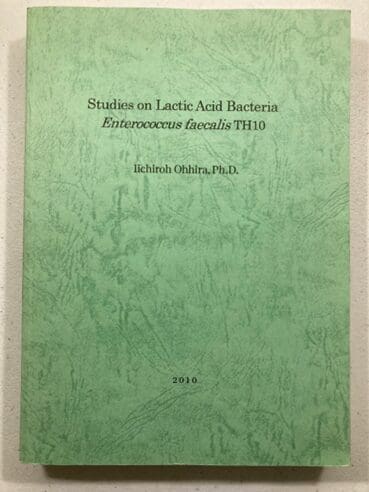
TH10 produces lactic acid as well as other organic acid postbiotic metabolites, including acetic acid and a metabolite known as 3-phenyllactic acid. Following its discovery and isolation, TH10 became a proprietary strain studied extensively by Dr. Ohhira and his research team. Their research focused on identifying and characterizing the strain’s metabolic activity and the postbiotic compounds it produces. These findings were compiled in Dr. Ohhira’s book, Study on Lactic Acid Bacteria: Enterococcus faecalis TH10.
Stephanie@essentialformulas.com or by phone at 972-255-3918.
In 2004, Dr. Ohhira identified 3-phenyllactic acid as a major postbiotic metabolite produced by TH10 and reported that it exhibits antibacterial activity against a range of microorganisms in laboratory studies, including Escherichia coli O‑157, Helicobacter pylori, Salmonella species, and methicillin‑resistant Staphylococcus aureus (MRSA). Subsequent research also documented antifungal activity against certain yeasts and fungi under experimental conditions.
Dr. Ohhira’s Probiotics is produced through a natural fermentation process that generates a wide spectrum of postbiotic metabolites. Among these metabolites is 3‑phenyllactic acid, which is associated with the metabolic activity of Enterococcus faecalis TH10. Dr. Ohhira’s published research describes TH10 as producing antimicrobial peptides and organic acids that contribute to microbial balance. This research forms part of what is referred to as The Dr. Ohhira’s Advantage.
Postbiotic metabolites such as 3‑phenyllactic acid have been shown in laboratory settings to inhibit the growth of certain microorganisms while exhibiting selective activity that does not disrupt beneficial bacteria.
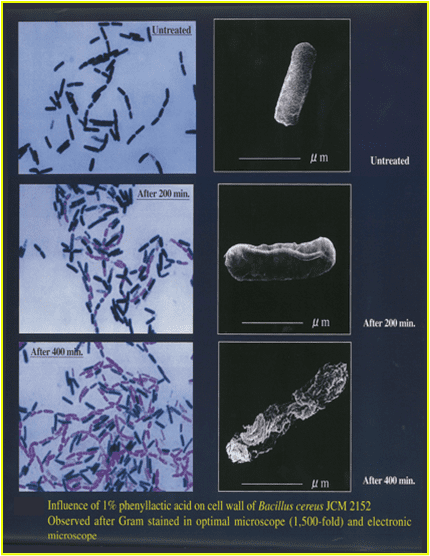
Electron microscope images (1,500× magnification) demonstrate structural changes in Bacillus cereus cells following exposure to a diluted solution of 3‑phenyllactic acid under controlled laboratory conditions. These observations show disruption of the bacterial cell membrane, which researchers associate with reduced bacterial viability.
Scientific References
- Ohhira, T. Study on Lactic Acid Bacteria: Enterococcus faecalis TH10. Japan.
- Lavermicocca, P. et al. (2000). 3‑Phenyllactic acid produced by lactic acid bacteria: antimicrobial activity. Applied and Environmental Microbiology.
- De Vuyst, L., & Leroy, F. (2007). Bacteriocins from lactic acid bacteria: production and applications. Journal of Molecular Microbiology and Biotechnology.
- Salminen, S. et al. (2021). Postbiotics: definition and health relevance. Nature Reviews Gastroenterology & Hepatology.
