
Clinical Evidence Snapshot:
Haematococcus pluvialis-Derived Astaxanthin
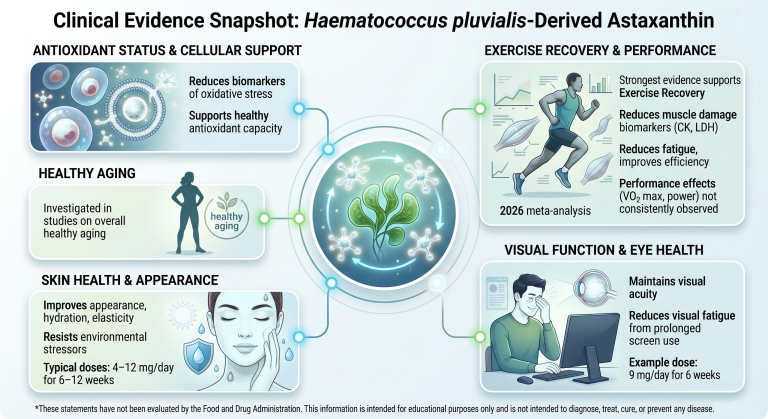
Natural astaxanthin derived from Haematococcus pluvialis has been evaluated in multiple randomized, placebo-controlled human studies investigating its effects on antioxidant status, exercise recovery, visual function, skin health, and healthy aging. While results vary by population and outcome measure, the overall body of evidence suggests a role for astaxanthin in supporting the body’s response to oxidative stress.
Exercise Recovery and Physical Performance
A 2026 systematic review and meta-analysis evaluated 24 randomized controlled trials involving healthy adults and athletes. Researchers found that astaxanthin supplementation was associated with reductions in biomarkers of exercise-induced muscle damage, including creatine kinase (CK) and lactate dehydrogenase (LDH). However, significant improvements in aerobic capacity (VO₂ max), endurance performance, or maximal power output were not consistently observed. The authors concluded that the strongest evidence currently supports a role in exercise recovery rather than direct performance enhancement.
A separate meta-analysis of 11 randomized controlled trials involving healthy adults reported favorable effects on fatigue-related outcomes and exercise efficiency measures, although study sizes were relatively small and additional research is warranted.
Eye Health and Visual Comfort
Several placebo-controlled trials have evaluated astaxanthin in adults experiencing visual fatigue associated with prolonged screen use. In one double-blind study, 9 mg daily for six weeks was associated with maintenance of visual acuity and reduced visual strain following intensive visual display terminal (VDT) work when compared with placebo. These findings have contributed to growing practitioner interest in astaxanthin for visual comfort support in screen-intensive populations.
Skin Health and Environmental Stress Support
Human studies evaluating natural astaxanthin have reported improvements in measures of skin appearance, hydration, elasticity, and resistance to environmental stressors. Reviews of the clinical literature identify skin health as one of the most consistently studied applications of astaxanthin supplementation, with most trials utilizing doses between 4–12 mg daily over periods of 6–12 weeks.
Oxidative Stress and Cellular Support
Across multiple human studies, astaxanthin supplementation has been associated with favorable changes in biomarkers related to oxidative stress and antioxidant capacity. Researchers propose that astaxanthin’s unique ability to integrate into cellular membranes may contribute to its antioxidant-supportive properties. While biomarker improvements are encouraging, additional large-scale studies are needed to determine how these findings translate into long-term clinical outcomes.
*These statements have not been evaluated by the Food and Drug Administration. This information is intended for educational purposes only and is not intended to diagnose, treat, cure, or prevent any disease.
