
Beyond Probiotics:
Why Postbiotic Metabolites Matter
A Practitioner-Focused Look at Diet, Fermentation, and Microbial Metabolites
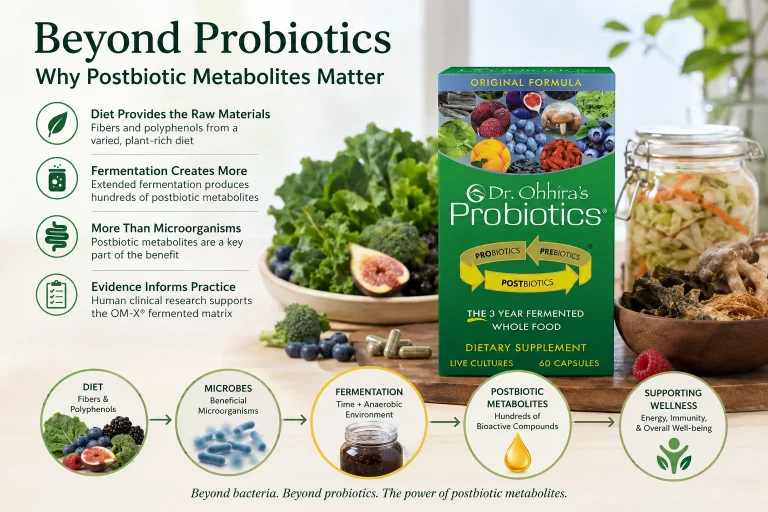
The gut microbiome is more than a collection of microorganisms. It is a metabolically active ecosystem in which microbes interact with dietary compounds—particularly fibers and polyphenols—to produce a wide range of microbial metabolites.
Diet Provides the Raw Materials
Dietary fibers and polyphenols provide important substrates for microbial fermentation:
Beneficial microorganisms + fermentable fibers and polyphenols → microbial metabolites
Many Americans fall short of recommended fiber intake. While dietary intake alone cannot tell us how much of any particular metabolite an individual produces, it reinforces the value of a varied, plant-rich diet for providing substrates to the gut microbiome.
Why Fermentation Matters
Dr. Ohhira’s Probiotics add another dimension to the microbiome conversation. The production process combines selected bacterial strains with fiber- and polyphenol-rich foods, including fruits, vegetables, mushrooms, and seaweeds.
These ingredients undergo extended fermentation—three years for Dr. Ohhira’s Probiotics Original Formula and an additional two years of anaerobic fermentation for the Professional Formula.
The result is more than microorganisms. The fermented matrix contains hundreds of postbiotic metabolites generated during the fermentation process.
OM-X: Human Clinical Research
OM-X, the fermented plant matrix associated with Dr. Ohhira’s fermentation technology, has also been evaluated in human clinical research.
In a 2022 randomized, placebo-controlled, double-blind study published in the Journal of Functional Foods, researchers evaluated 12 weeks of OM-X supplementation in healthy adults experiencing temporary fatigue. Significant between-group differences were reported in subjective fatigue measures, and no safety-related concerns were reported during the study.1
A second randomized, placebo-controlled, double-blind study published in 2023 evaluated OM-X over 12 weeks in 39 healthy adults using health-related quality-of-life and physical-condition measures.2
These studies add to the research surrounding the OM-X fermented matrix. As with all clinical research, findings should be interpreted within the specific population, formulation, endpoints, and study design evaluated.
Practitioner Takeaway
Think beyond bacterial counts.
- Encourage a varied, plant-rich diet to provide fibers and polyphenols for microbial fermentation.
- Consider how a probiotic is manufactured—not simply which organisms appear on the label.
- Distinguish between products that primarily deliver microorganisms and extensively fermented formulations that also contain postbiotic metabolites.
- Evaluate clinical evidence according to the specific formulation and population studied.
Bottom line:
Supporting the microbiome is about more than adding bacteria. Diet provides substrates for microbial activity, while extended fermentation can provide microorganisms together with metabolites generated during the fermentation process.
References
Clinical study findings are specific to the populations, formulations, endpoints, and conditions evaluated and should not be interpreted as evidence that OM-X or Dr. Ohhira’s Probiotics diagnose, treat, cure, or prevent any disease.
