
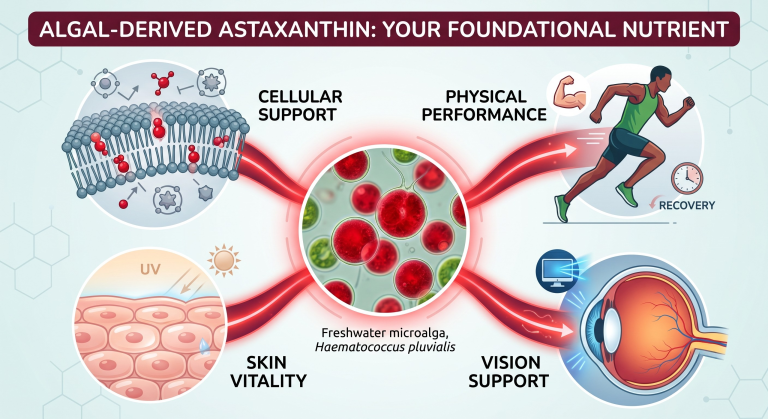
Algal-Derived Astaxanthin (Haematococcus pluvialis) as a Foundational Cellular Support Nutrient
In clinical nutrition and integrative practice, astaxanthin derived from the microalga Haematococcus pluvialis continues to gain attention as a well-characterized carotenoid that supports antioxidant balance, cellular resilience, and overall physiological function.
This update summarizes current practitioner-relevant insights while maintaining appropriate structure/function language consistent with U.S. dietary supplement marketing guidelines.
Overview: A Unique Marine-Derived Carotenoid
Astaxanthin is a naturally occurring, fat-soluble carotenoid in the xanthophyll family. It is known for its ability to integrate into lipid membranes, where it supports protection against oxidative stress at the cellular level.
Because of its unique molecular structure, astaxanthin is frequently utilized in nutritional protocols focused on:
- Antioxidant support
- Cellular membrane integrity
- Healthy inflammatory balance
- Skin and ocular tissue nourishment
- Exercise recovery and physical performance support
Primary Source: Haematococcus pluvialis
The most widely studied natural source of astaxanthin is: Haematococcus pluvialis
This freshwater microalga accumulates astaxanthin as a protective pigment in response to environmental stressors such as UV exposure and nutrient limitation. This natural accumulation process is what makes it a preferred source for high-quality dietary supplementation.
Key quality attributes of Haematococcus-derived astaxanthin include:
- Naturally occurring carotenoid profile
- Predominance of biologically relevant stereoisomers
- Compatibility with human lipid absorption pathways
- Consistent potency when properly standardized
Mechanisms of Nutritional Activity (Structure/Function Framing)
Astaxanthin supports several physiological processes relevant to practitioner-guided wellness programs:
- Antioxidant Activity and Cellular Support
Astaxanthin helps support the body’s natural antioxidant defenses by interacting with free radicals in lipid-rich environments such as cell membranes.
- Cellular Membrane Integrity
Due to its unique structure, astaxanthin integrates into phospholipid bilayers and helps support membrane stability under conditions of oxidative stress.
- Support for Normal Inflammatory Balance
Astaxanthin is associated with modulation of pathways involved in healthy inflammatory responses, contributing to overall cellular homeostasis.
- Mitochondrial and Energy Support
Astaxanthin supports normal mitochondrial function, which plays a central role in cellular energy production and metabolic efficiency.
Practitioner Applications in Wellness Protocols
Within integrative and functional practice settings, algal-derived astaxanthin is commonly included as a foundational support nutrient in the following areas:
- Physical performance and recovery support
Used in wellness protocols aimed at supporting endurance, recovery time, and exercise-related oxidative stress balance. - Skin health and photoaging support
Included in nutritional regimens designed to support skin hydration, elasticity, and resilience against environmental stressors such as UV exposure. - Ocular and visual function support
Used in nutritional strategies supporting visual comfort and healthy eye tissue function, particularly in high screen-exposure lifestyles. - Cardiometabolic wellness support
Included in broader nutritional programs supporting cardiovascular function and metabolic health as part of a healthy lifestyle.
Suggested Use Ranges (Practitioner-Guided)
Commonly used intake ranges in supplementation protocols:
- General antioxidant support: 4–8 mg daily
- Performance and recovery support: 8–12 mg daily
- Advanced practitioner protocols: up to 16 mg daily (often divided doses)
Astaxanthin is fat-soluble and is typically best taken with meals containing dietary fat to support absorption.
Safety and Tolerability Considerations
Astaxanthin is generally well tolerated when used as directed in dietary supplement form.
Practitioner considerations may include:
- Mild blood pressure-lowering effect in some individuals
- Potential additive effects when used alongside anticoagulant or antiplatelet therapies (monitoring may be appropriate)
- Occasional mild gastrointestinal discomfort at higher intake levels
- Not intended for use as a sole intervention for any health condition
Quality Considerations for Clinical Use
To ensure consistency in practitioner settings, consider the following quality markers:
- Verified source: Haematococcus pluvialis
- Standardized astaxanthin content per serving
- Oil-based delivery systems for absorption support
- Third-party testing for purity and stability
- Clear labeling of natural carotenoid profile
Practitioner Summary
Algal-derived astaxanthin from Haematococcus pluvialis represents a well-researched carotenoid used in nutritional practice to support antioxidant defenses, cellular integrity, inflammatory balance, and overall physiological resilience.
When integrated into comprehensive wellness protocols, it functions as a foundational nutrient supporting multiple systems involved in oxidative stress response and cellular energy dynamics.
*These statements have not been evaluated by the Food and Drug Administration. This product is not intended to diagnose, treat, cure, or prevent any disease.
