Not always. Some probiotics can survive stomach acid without a special capsule, while others benefit from added protection. Survival depends on the specific strain, the ingredients surrounding the bacteria, and the delivery method. The starting dose also affects how many live organisms may remain after digestion, but it does not determine their resistance to acid.
An enteric coating or delayed-release capsule can be useful, but no single probiotic delivery system is required for every product. Understanding these approaches can help you compare the complete formula and the evidence behind it.
Do probiotics survive stomach acid?
Some do, but survival varies. Stomach acid helps break down food and provides a barrier against many microorganisms we ingest. It can also reduce the number of live probiotic organisms that reach the intestines.
Even strains within the same bacterial species can respond differently to digestive conditions. A name such as Lactobacillus acidophilus identifies a species, but does not tell you how well a particular strain or finished product will tolerate stomach acid. Protective ingredients and the food or supplement carrying the bacteria can also influence survival.[1,2]
How probiotic delivery systems work
When comparing probiotic delivery systems, you may encounter several terms. These approaches can overlap, and a product may use more than one.
Enteric coatings. An enteric-coated probiotic capsule is designed to resist stomach acid and release its contents under conditions encountered farther along the digestive tract. Enteric coating is one way to achieve delayed release. In one laboratory study, an enteric-coated, multilayer tablet improved survival of the tested bacteria in a simulated digestive system. That finding supports the specific formulation studied, rather than every coated tablet or capsule. [2]
Delayed release. A delayed-release probiotic is designed to postpone release of its contents. The term alone does not establish how much acid protection it provides or exactly where release occurs. Look for testing of the particular capsule and its contents, rather than relying on the label description alone. [3]
Microencapsulation. This approach surrounds the bacteria themselves with protective materials, rather than relying only on an outer capsule. For example, researchers improved survival of certain bacteria in simulated digestive conditions using alginate beads with a chitosan coating. These results apply to the organisms and materials tested. [4]
Laboratory survival testing and human studies answer different questions. A laboratory model can assess protection during simulated digestion; human studies evaluate whether a particular product or strain, at a particular dose, provides a health benefit.
Where freeze-drying fits
Does a higher dose improve survival?
Colony-forming units, or CFUs, estimate the number of live microorganisms in a serving. Starting with more organisms may leave more survivors if the same proportion survives digestion. It does not make individual cells more acid-resistant, and the proportion surviving can differ between formulations.
A larger CFU count also does not automatically mean greater benefit. The useful dose depends on the organism, product and intended outcome. Compare the amount provided with the amount supported by relevant human research. [1,5]
Looking inside a fermented formulation
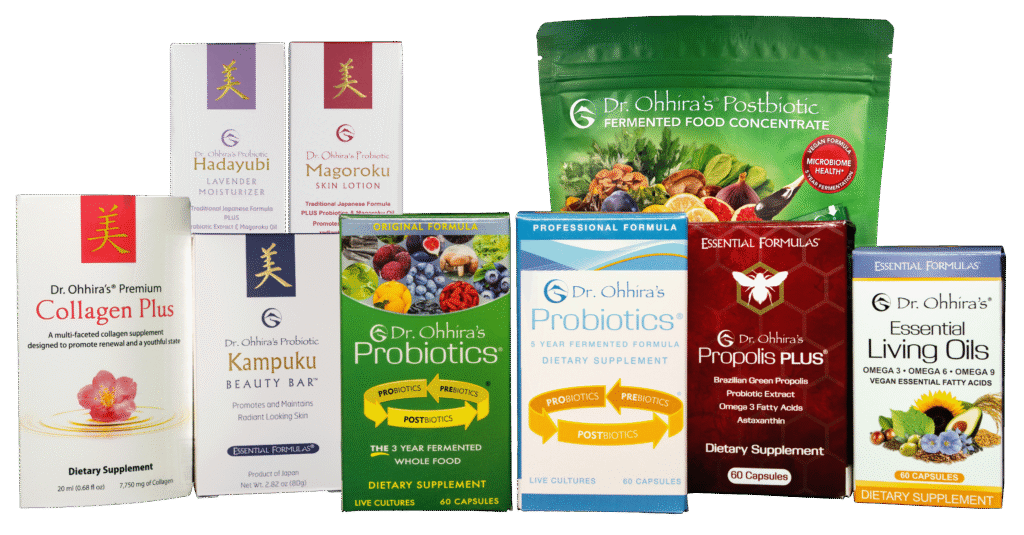
Dr. Ohhira’s Probiotics® Original Formula is made through a three-year fermentation process using whole-food ingredients and selected probiotic strains. As the bacteria ferment the food ingredients, they produce naturally occurring postbiotic metabolites. The finished formula contains live cultures, their fermented food matrix and the metabolites created during fermentation. It supports digestive health.* [6]
For consumers comparing probiotics, this whole-food fermentation process is an important part of understanding the complete formula. Looking at how a product is made and what it contains adds useful context to the information about its capsule. Learn more about Dr. Ohhira’s fermentation process.
What should consumers look for?
Use these four questions to compare products:
- Strains: Which specific strains does the product contain?
- Dose and research: What amount does it provide, and does relevant human research support that dose for the intended use?
- Finished-product testing: If the company claims stomach-acid survival, was the finished formulation tested? Was the evidence obtained through simulated digestion or testing in people?
- Storage and directions: How should the product be stored and taken to maintain its quality?
So, do probiotics need a special capsule? Some benefit from one, but there is no universal requirement. Evaluate the strain, formulation, dose and delivery method together, with evidence supporting the complete product.
References
1. NIH Office of Dietary Supplements. Probiotics: Fact Sheet for Health Professionals. Source
2. Venema K, et al. Probiotic survival during a multi-layered tablet development as tested in a dynamic, computer-controlled in vitro model of the stomach and small intestine (TIM-1). Letters in Applied Microbiology. 2019;69(5):325–332. Source
3. Wang JL, et al. Viability of Lactobacillus acidophilus in Thin-Film Freeze-Dried Powders Filled in Delayed-Release Vegetarian Capsules in a Simulated Gastric Fluid. AAPS PharmSciTech. 2023;24(7):193. Source
4. Chávarri M, et al. Microencapsulation of a probiotic and prebiotic in alginate-chitosan capsules improves survival in simulated gastro-intestinal conditions. International Journal of Food Microbiology. 2010;142(1–2):185–189. Source
5. Ouwehand AC. A review of dose-responses of probiotics in human studies. Beneficial Microbes. 2017;8(2):143–151. Source
6. Essential Formulas. The Science of Dr. Ohhira’s Formula Fermented Probiotics. Manufacturer information. Source